

Redefining The SGI Vegas Experience
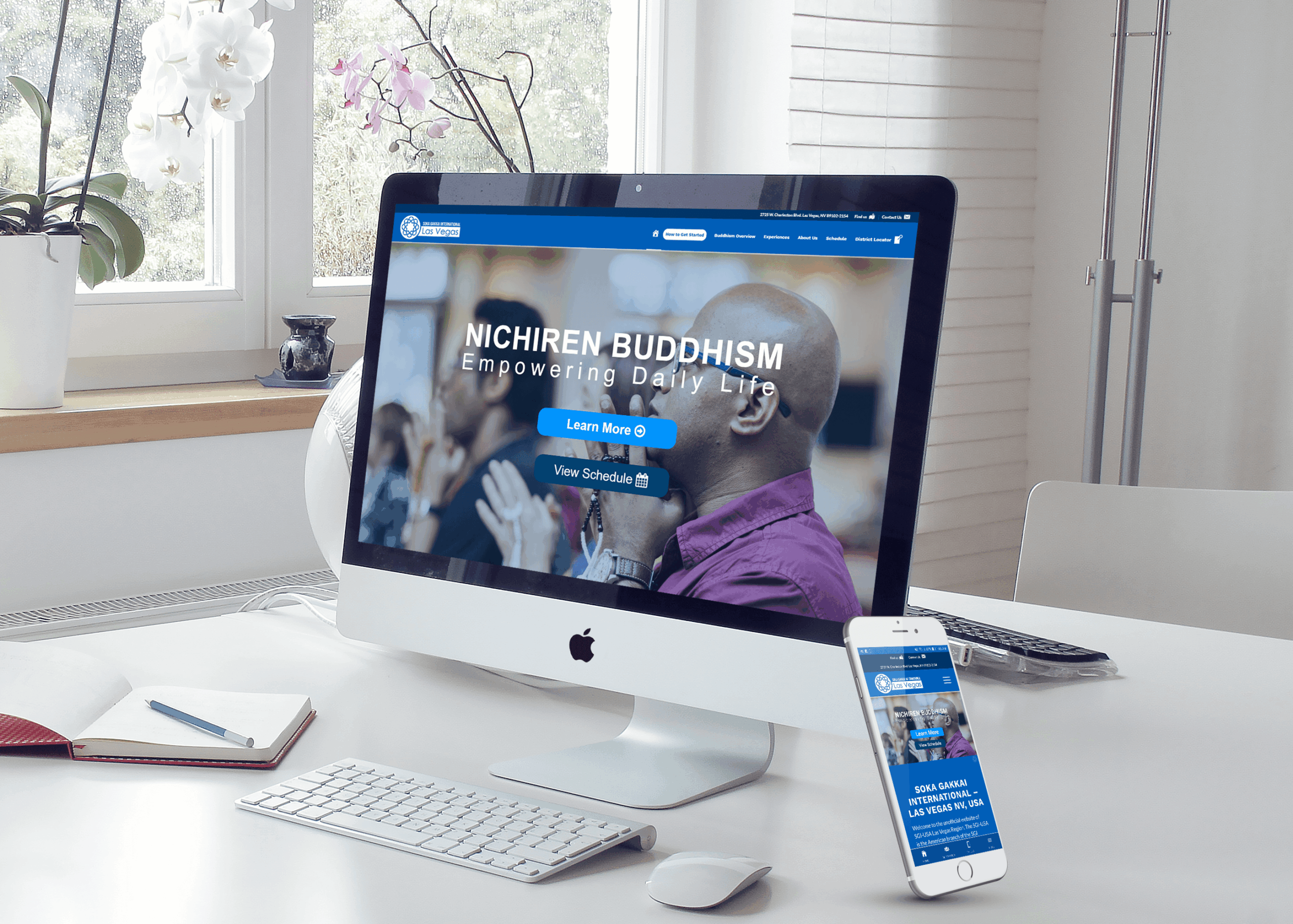
Helping SGI-USA Las Vegas redesign and convert their website into a progressive web app.
Duration
4 months
Role
UX, Product Design, Deployment
Tools
Pen/Paper, Draw.io, Adobe Creative Suite, HTML, CSS, Javascript and PHP.
View the SGI's live website here
Overview
SGI Las Vegas is a non-profit lay Buddhist organizational branch of Soka Gakkai International (Value-Creation Society) or SGI for short. SGI’s mission is to deliver value through peace, culture and education via the foundation of Nichiren Buddhism as a fundamental practice. Soka Gakkai International has members in over 196 countries and territories worldwide. SGI Las Vegas wanted me to take their site into the 21st century while keeping it congruent to the organization’s values and mission.
Objective & Constraints
The mission which I chose to accept, was to completely redesign their website and convert it into a progressive web app usable on any device. The main purposes of this app were to introduce seeking individuals to Nichiren Buddhism, so they could positively impact their lives, and to provide SGI members with up-to-date information on upcoming meetings.
I was only allowed to use media sanctioned by SGI; no commercial stock photography or video was allowed. Any photos of SGI members had to be pre-approved with consent before use. All written copy had to be sourced from SGI-approved content either from official websites or SGI publications. The project had to be completed within budget and launched before April of 2017.
MY PROCESS
Key Deliverables
(Choose an icon to skip to the good stuff.)
KICKOFF MEETINGS AND RESEARCH
Discovering SGI
I began this process by facilitating group meetings and interviews with the key stakeholders of SGI to understand who they were as an organization and what their vision was for this project. My goal was to gain their perspective and know the context of what they wanted. I asked them the following questions:
- Why does this organization exist?
- Why do you feel you need a redesign?
- What does success look like, and what do you hope to gain?
- What are your goals and priorities behind this project?
- What are your absolute musts for this project?
- What’s working right now, and what isn’t?
- What are your frustrations, worries, and concerns?
- Whom is this project serving?
CONTEXTUAL INQUIRY - INTERVIEW HIGHLIGHTS
What I learned from SGI
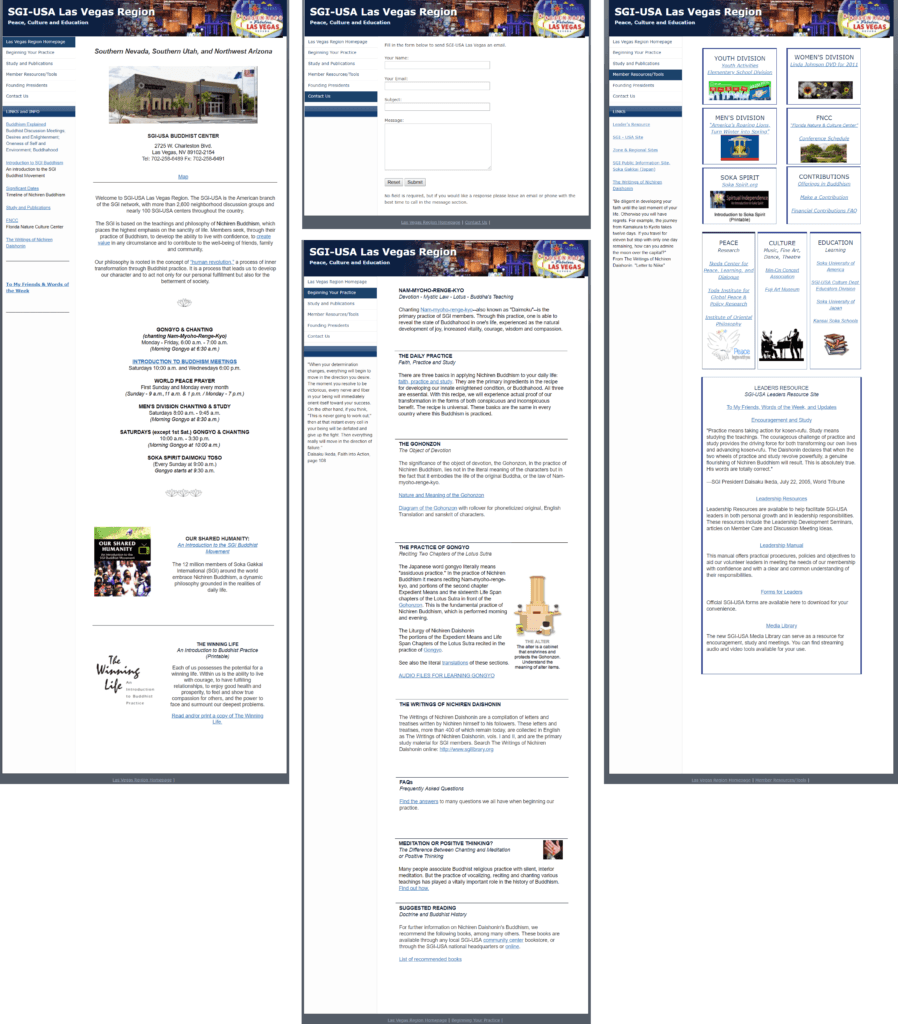
One of the first things I learned was that most of the stakeholders were embarrassed to even show their website to their friends and family. They felt that it was not a proper representation of who they were as an organization; the site was very outdated, and it was extremely difficult to read on a mobile device. Secondly, I learned that their intent behind the website was to introduce new, open-minded individuals to the SGI Buddhist organization and show them the real value Nichiren Buddhism could have in their lives.
They wanted the new audience to know that they could positively impact their lives by practicing Nichiren Buddhism. The focus as an organization was to share Buddhism with as many people as possible and invite them to be a part of the SGI Buddhist movement. The organization’s leaders also knew that they had the content and testimonials to prove the validity of their practice and to show how it has changed people’s lives for the better.
Their Former Website
COMPARATIVE ANALYSIS
What was the state of other SGI websites?
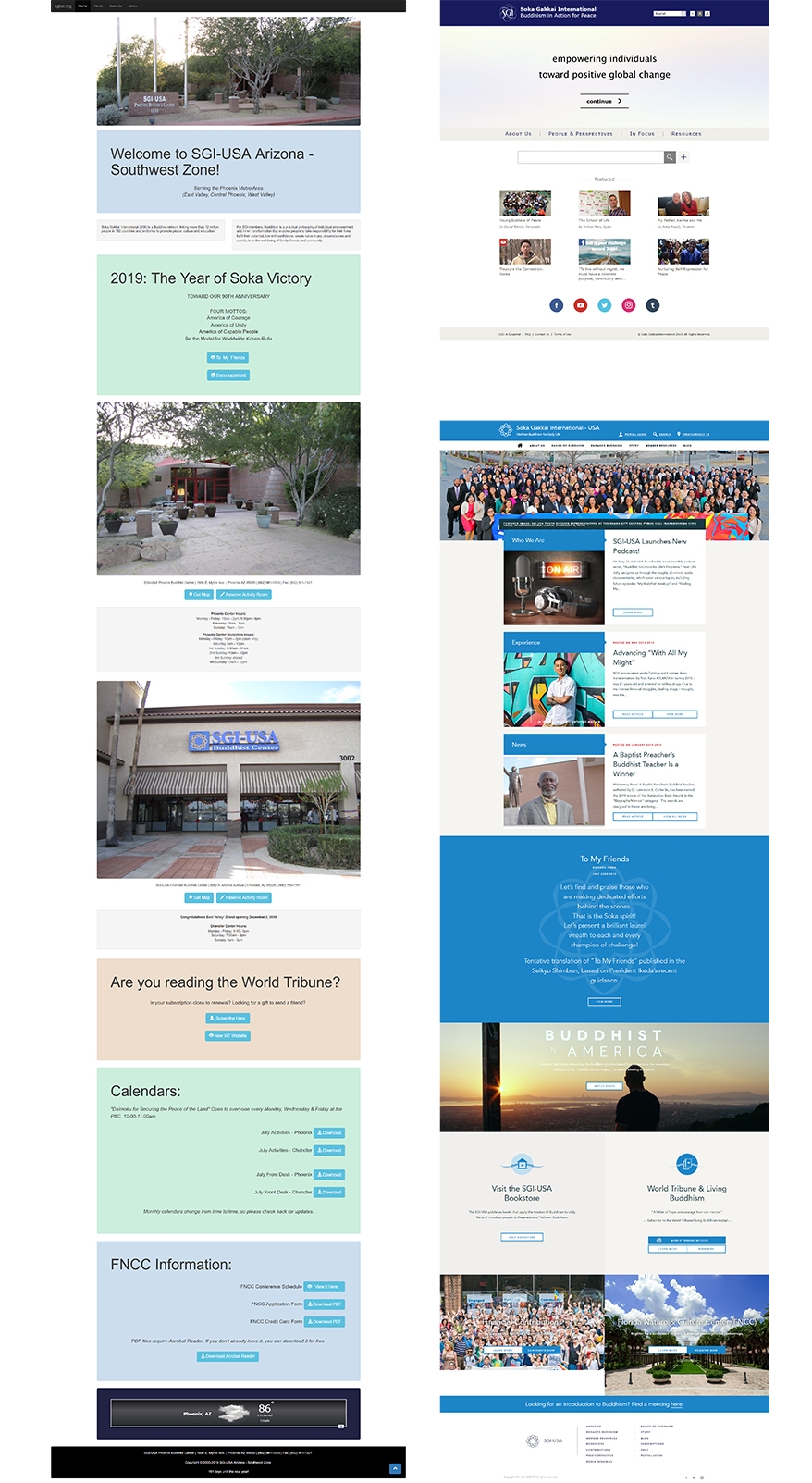
Since there wasn’t a direct competitor of local Buddhist non-profit organizations in the Las Vegas Valley, I decided to compare and research SGI websites across the globe. I noticed that all of them used similar content, but not all of the websites were updated regularly. One thing they had in common was that the websites were geared to show SGI’s mission and culture first, before introducing Nichiren Buddhism to the general public. Here are three out of ten sites I’ve researched:
USER PERSONAS
Whom is this project serving?
After getting an understanding of SGI’s mission and why they exist as an organization, I wanted to know whom was this project ultimately serving. After more in-person interviews and immersing myself in SGI’s culture by participating in their activities, I found that this project would serve these two personas:

PRIMARY USER
The Seeking Spirit (Newbie)
This open-minded person is curious about other philosophies outside of his current one. He may or may not have been exposed to Buddhism in the past.
Behaviors
- He is constantly searching for answers about how to change his life for the better in all aspects
- He tends to self-reflect a lot about his own beliefs and behaviors as a person
Painpoints
- He hates being told what to believe without, reason, cause or plausible justification.
- He feels the current religion he follows limits and hurts him in some way.
- He hates feeling guilty for believing things outside the paradigm of his current social circle.
- He feels like an outsider because of his beliefs and is tired of living in fear.
Goals and Motivations
- He is looking for a pragmatic and socially-proven philosophy that will positively impact his life and those he cares about.
- He ultimately wants to be definitively happy and fulfilled on his own terms.
- He wants to be a part of a community that is all-inclusive and of a similar mindset to his own.

SECONDARY USER
The Practitioner (SGI Member)
This person has been practicing Nichiren Buddhism daily for three months or more and attends SGI activities on a weekly basis.
Behaviors
- She chants Daimoku and recites Gongyo on a daily basis.
- She attends local Buddhist neighborhood and community center meetings on a regular basis.
- She participates in monthly District Meetings and World Peace Prayer meetings.
- She may subscribe to SGI publications for insight and inspiration.
Painpoints
- She wants to know the latest news on events and meetings in her area, but can’t due the current state of the website.
- She tends to miss out on meetings due to inaccurate information and last-minute notifications, making planning difficult.
- She is embarrassed to show the SGI website to friends and family due to its current condition.
- She has a desire to share Nichiren Buddhism and help others, but isn’t confident about her ability to influence people.
Goals and Motivations
- She needs digital, well-written content on Nichiren Buddhism to help her explain and prove that Nichiren Buddhism works.
- She wants an easy way to find chapter and district meetings in her city, so that she can invite her friends.
USER STORIES
What do the users want to achieve, and why?
Newbies
- The general public who are conceptually open to Buddhism want a brief explanation of what things mean and how to chant, so that they can try Nichiren Buddhism themselves.
- The “Seeker” wants to see social proof of Nichiren Buddhism working for others, so they can decide whether or not Nichiren Buddhism is right for them.
- The open-minded individual wants to be part of a community that makes a difference and values true happiness.
SGI Members
- Practitioners want to be up-to-date with SGI meetings happening in their area, so they can easily introduce their friends to Nichiren Buddhism.
- Members want quick access to information on Nichiren Buddhism that can be easily shared, so they can utilize it during their District Discussion meetings.
- SGI members want access to experiences and testimonials that prove the positive impact of Nichiren Buddhism, so they can influence others to try it.
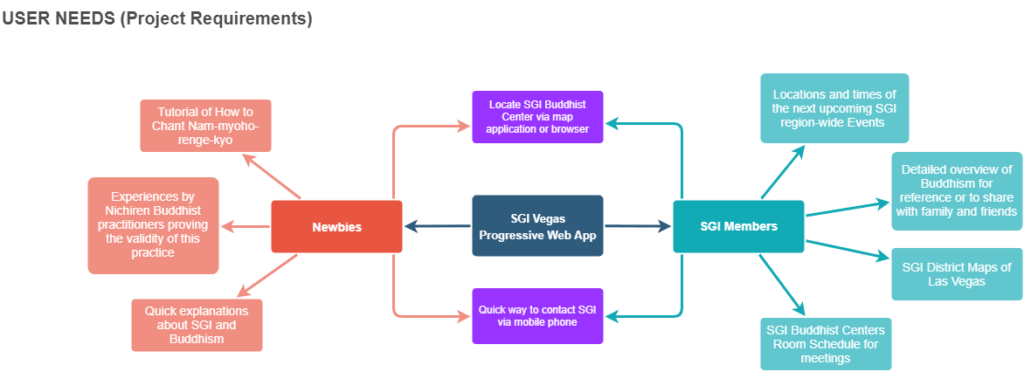
USER NEEDS
Taking care of business
Taking all the feedback I had gained in consideration, I then wanted to map out content and features that would best fulfill users’ needs and heal their pains. In addition, physically participating in SGI’s events and activities really gave me sense of what users wanted.
INFORMATION ARCHITECTURE
How is the content structured?
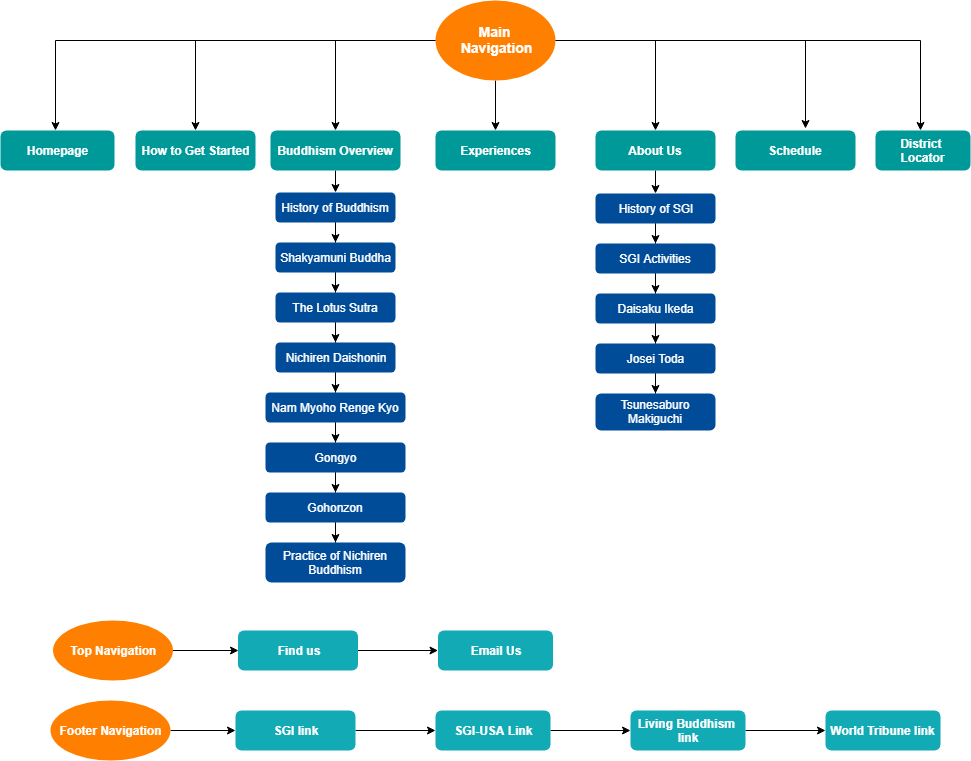
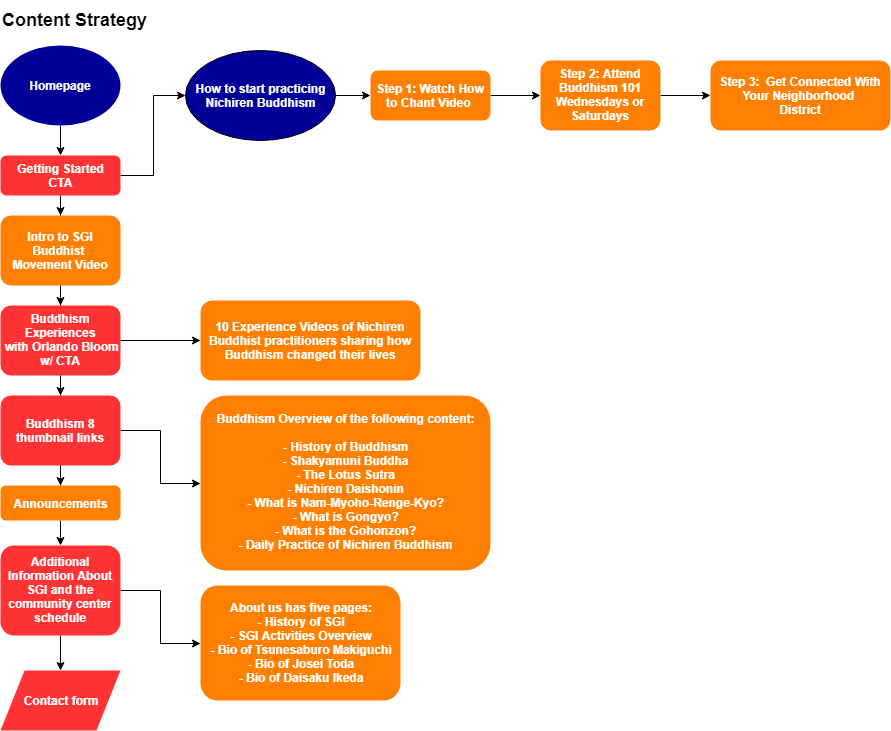
SKETCHED LOW FIDELITY WIREFRAMES
Forming Ideas and Concepts
After organizing the data I had gained, I started to form ideas about how this app would function on multiple devices. I opted for a simple “one-two click approach” to my design that could be applied to any device.
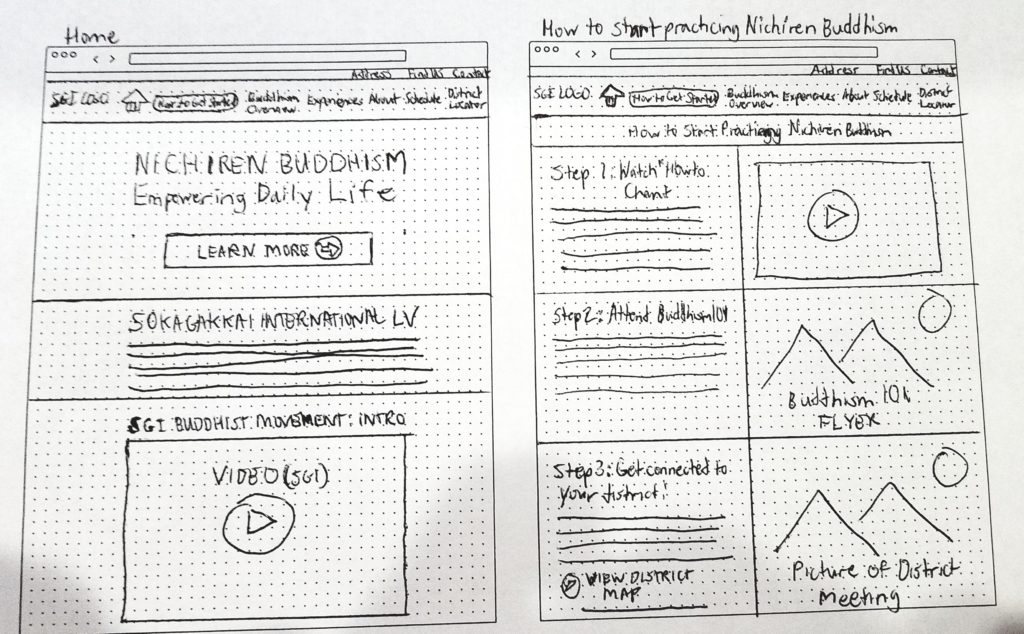
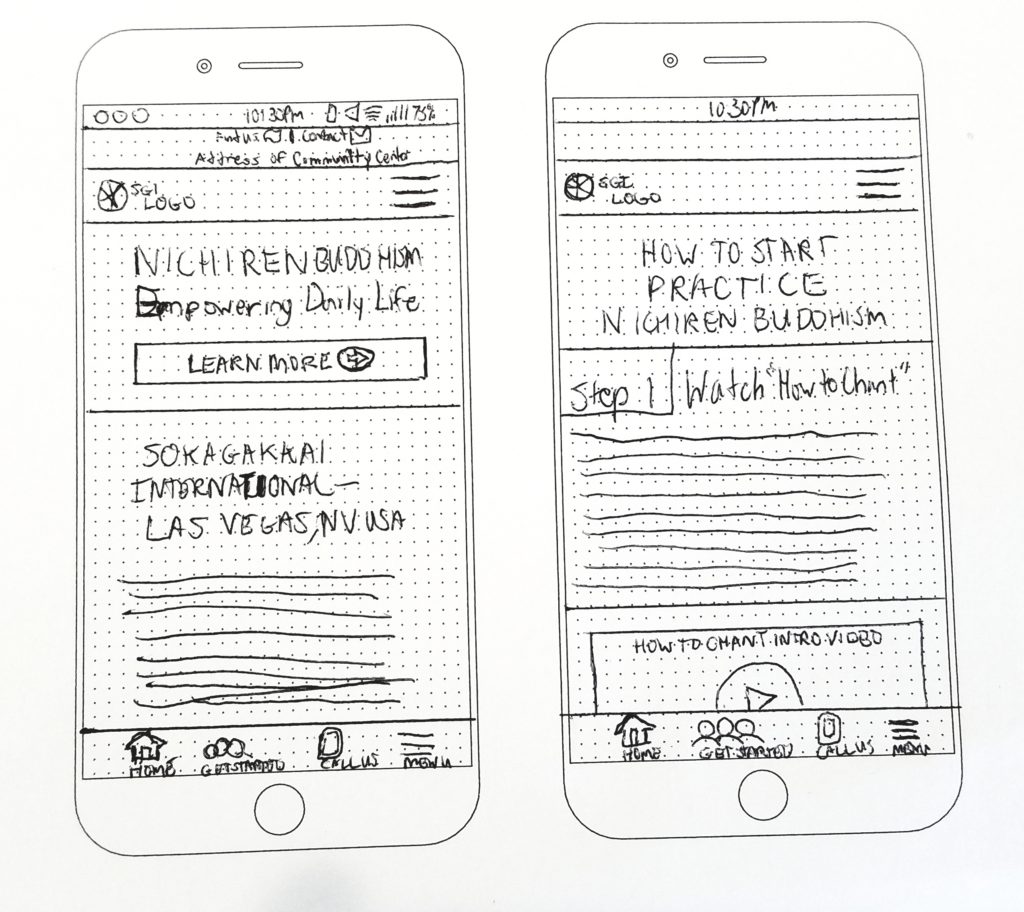
BRAND STRATEGY AND IDENTITY DESIGN
Uniting The Look & Feel The Project
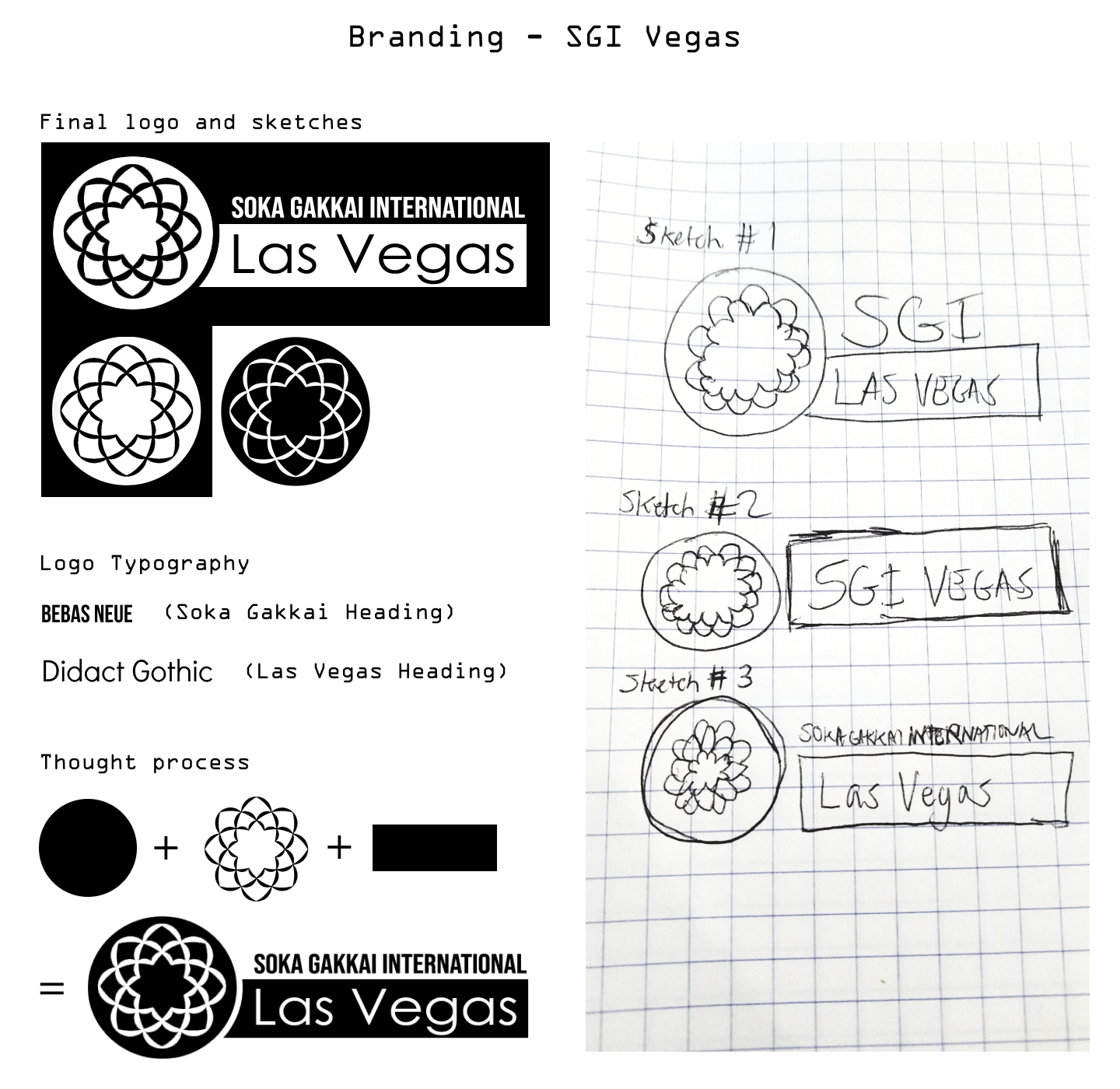
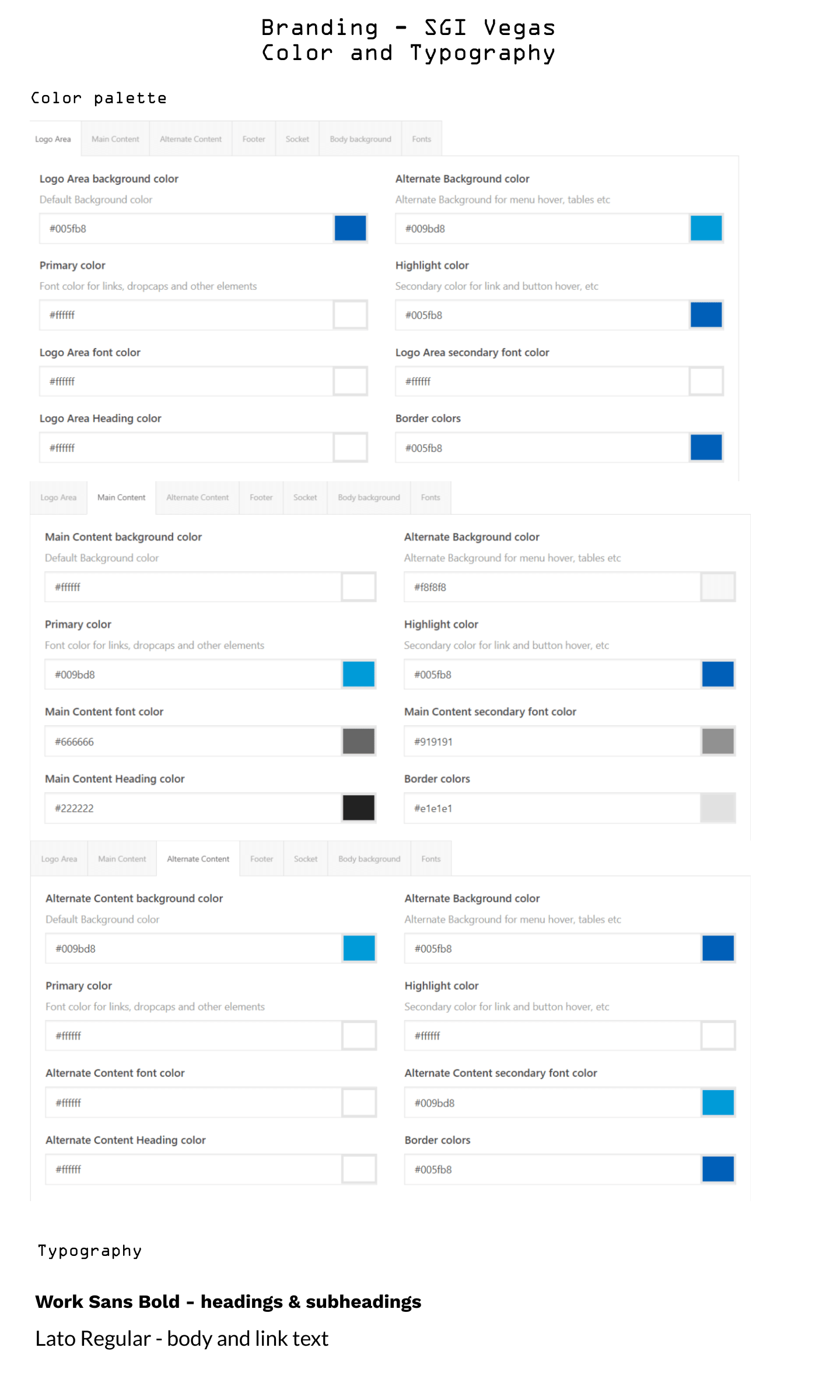
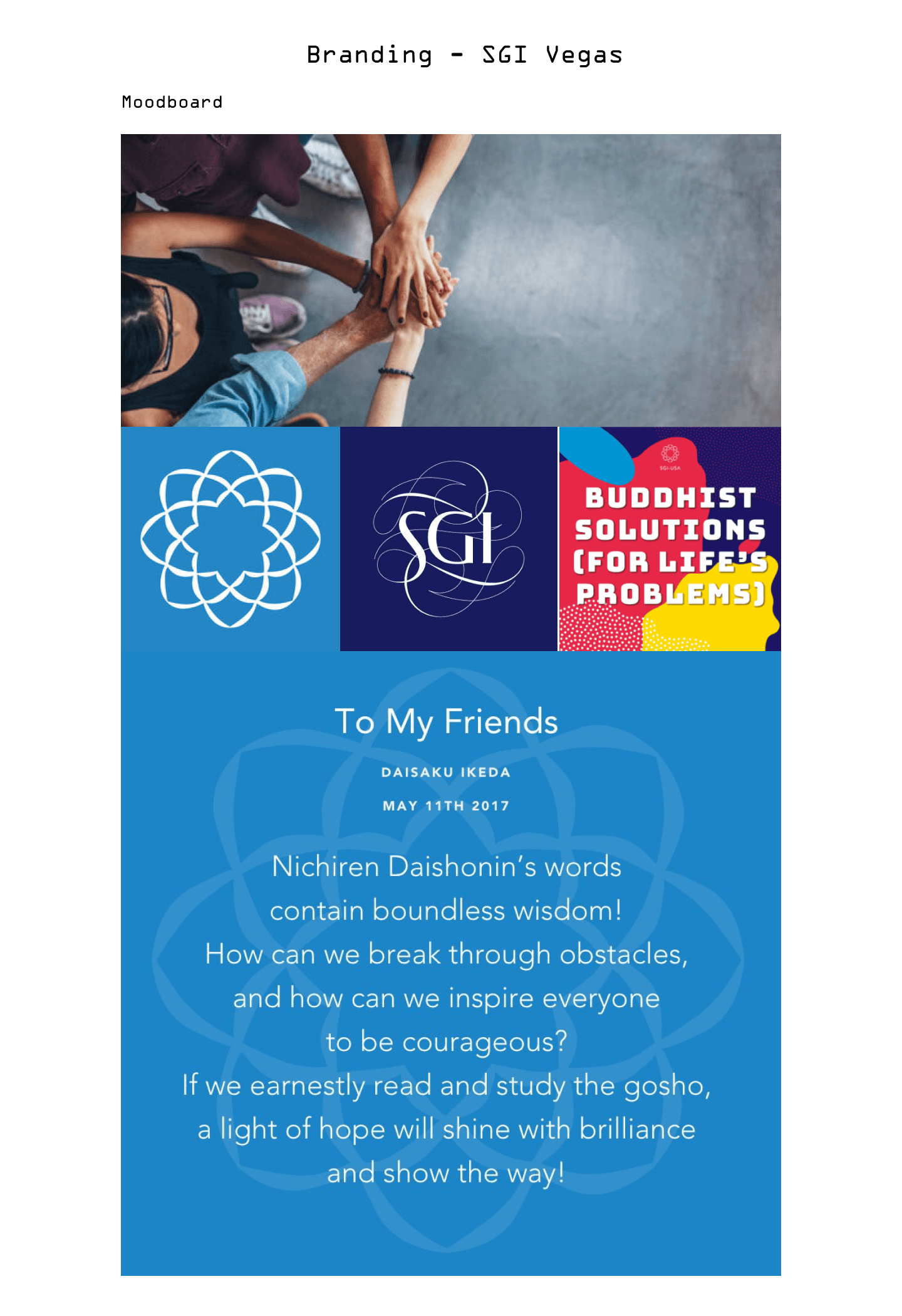
The key stakeholders of SGI Las Vegas agreed to have a similar aesthetic as SGI-USA and SGI Japan to represent them congruently across the rest of the worldwide branches. The sketches below show the corresponding color palette, logo, and typography I felt would best reflect their brand. Brand attributes of SGI-Vegas are: Faith-based, Trustworthy, Informative, Community-Driven and Optimistic.
DEPLOYMENT
This link will take you to the progressive web app (PWA) that can be saved to your phone or desktop as a standalone app.
CONCLUSION & REFLECTION
What went right, & what didn't?
90% of all the features were implemented in this project at final launch. The last 10% of the intended features were added afterward due to time and budget. The SGI District locator map was added after deployment.
Like any project, rarely anything goes perfectly as planned. During development most of the ideas were feasible and some were not, so I decided to scrap the unfeasible ones altogether. Certain content rendered well on desktop, but not so well on mobile, and vice-versa. The site had some performance issues initially, but overcame them with a better CDN and hosting plan. One of the best parts of this project was having a 20% increase in new guest attendance at the organization’s Buddhism 101 meetings due the site’s redesign and SEO improvements (as of April 2017).
What I Learned After Deployment
- Keep innovating instead of iterating. Pushing my capabilities and creativity allows me to deliver more value to the user.
- When conducting contextual inquiries, it’s much better to go deep with a few than shallow with the many. Quality data over quantity was appropriate for this particular project.
- Make sure the client to commits to a “drop-dead” deadline before I take the project with all of their content upfront to reduce delay.
- Note to self, implement a CDN (Content Delivery Network) sooner rather than later.
- Have multiple backups outside of hosting, either in a cloud storage or stored on a local machine in case of server issues. This would have saved me a ton of headache during transfers, upgrades and repairs.
FUTURE STEPS >>>
What's Next?
- Add more accessibility features with video and audio, making it ADA complaint.
- Create a multi-language version of this site in Japanese once I get the content properly translated.
- Build a dedicated app for SGI leadership and administrative staff to use for membership statistics, event reservations and bookkeeping for donations.
Let's collaborate.
Have an upcoming design project or business challenge?
Let’s chat so I can understand your situation and better serve you.